
North American Black Bear Plays on His Back in the Houston Zoo's Hamill Foundation Exhibit
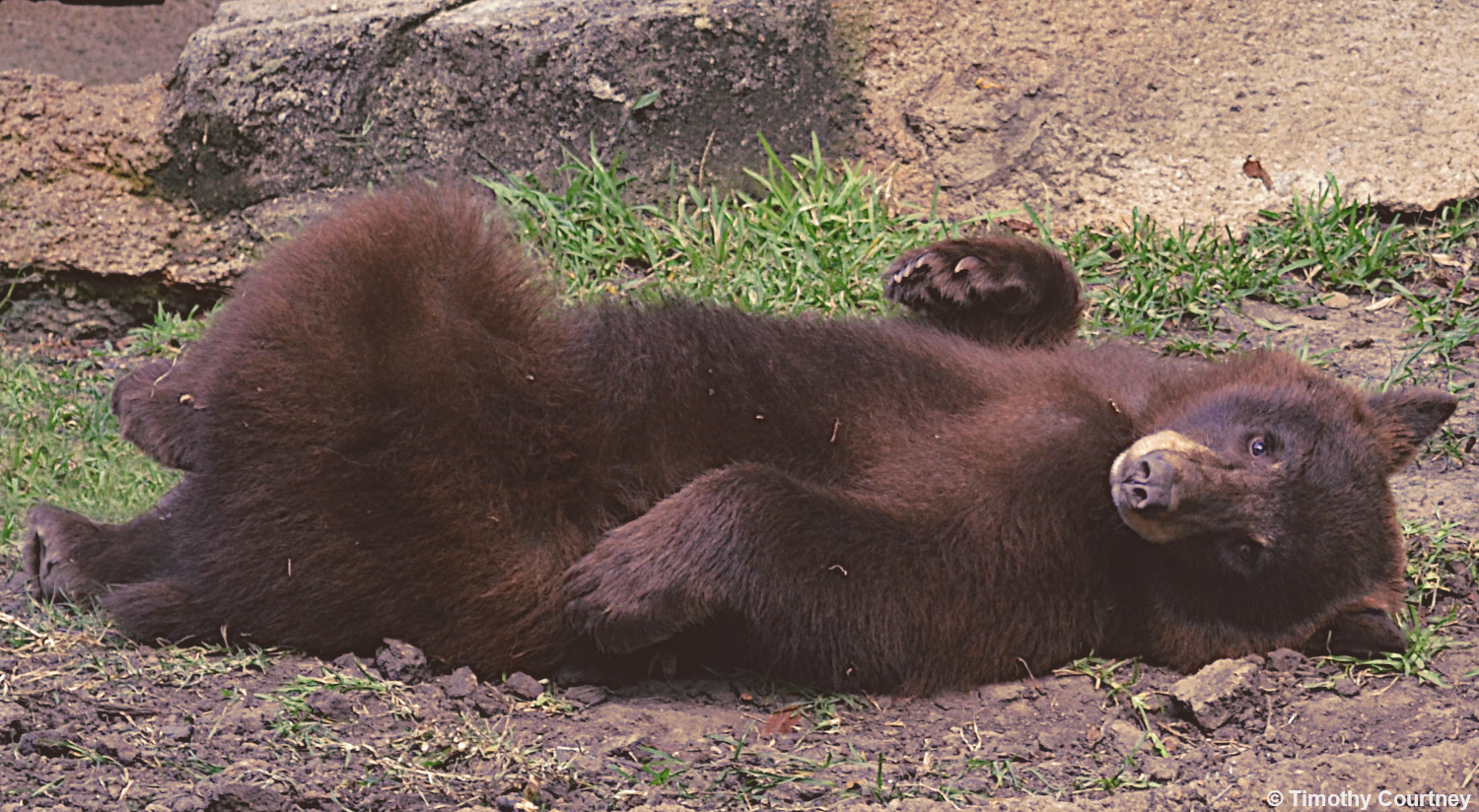
This playful brown furred bear caught my attention at the Houston Zoo. He spent time lying on his back, rolling around, and looking right at me.
His playful behavior made for a fun and memorable photograph. Even though his fur is brown, he is a North American black bear, also known by his scientific name, Ursus americanus.
The name can be confusing because black bears do not always have black fur. Their coats can be black, brown, cinnamon, or even blonde.
This bear is a great example of the many colors found in this species.
North American black bears are found across much of North America and are very adaptable animals. They can live in forests, mountains, wetlands, and many other habitats.
Their ability to live in different environments makes them one of the most widespread bear species in North America. Black bears are omnivores, which means they eat both plants and animals.
Their diet can include berries, fruits, nuts, plants, insects, and small animals.
They have an excellent sense of smell that helps them find food, and their diet can change with the seasons and the food available.
Black bears are strong and active animals with powerful legs, large paws, and sharp claws. They are good climbers and swimmers and can use their claws to dig for food.
Young black bears are especially good at climbing trees. Their fur helps protect them from changing weather and keeps them warm.
Black bears usually live about 15 to 25 years, although they can live longer with excellent care.
The bear in this photograph lives at the Houston Zoo in the Hamill Foundation Black Bear Exhibit.
One of the things that stood out most was how playful and curious this bear seemed. Lying on his back and watching me, he looked relaxed and comfortable.
North American black bears can differ in size, fur color, personality, and behavior. Some may be shy, while others can be curious and active.
Watching them closely can reveal many interesting behaviors that are easy to miss.
The Houston Zoo provides an important opportunity to see North American black bears and learn more about their behavior and natural history.
Seeing one in person also makes it easier to appreciate how powerful and well adapted these animals are. This photograph captures one small moment in the life of a brown furred black bear.
The next time you see a brown, cinnamon, blonde, or black bear, remember that fur color alone does not tell you what species you are looking at.
This playful bear at the Houston Zoo certainly made an impression and reminded me that photography is often about capturing those unexpected moments.